An English Anaesthetist and Cardiologist travel to South Sudan to volunteer in Juba Teaching Hospital for 10months.

Monday, 25 July 2011

Freedom Oyee!

What a day! And what an honour to be part of it! Sure, we weren’t rubbing shoulders with the political elite, or sipping fine wine in the celebrity tent, but we were out on the ground with the South Sudanese people celebrating the formation of the newest nation on the planet. After a late night up by the River Nile we rose before the sun and hitched a ride with Stuart, our Canadian Farmer friend up to the hospital, having precious little trouble with security on the way. The hospital was calm in the early morning glow and we headed across the street to where we get our usual ginger spiced coffee and black tea at the small tea hut nestled on the packed mud near the doctors’ mess. Two glasses later and the hospital compound had sprung into life. Ambulances had been driven up from Kampala, the capital of Uganda, and were ready to transfer the sick from the celebration site to the hospital. A party atmosphere was in the air and even baby vuvuzela’s made an appearance. The ambulance train headed off at speed, siren echoing round the still empty (but after the ‘keep juba clean and green’ campaign no longer dusty) streets and was comfortably ushered through the heavily armed security and mounted weaponry that lined the roads and roundabouts.

The ‘stadium’ where the ‘normal’ South Sudanese were to celebrate lay across the road from the ‘Mausoleum’, the grave of the late great Dr John Garang. I have probably mentioned him already but he deserves a repeat. Leader of the SPLA (Sudan People’s Liberation Army) for 21 years until the signing of the Comprehensive Peace Agreement (CPA) in 2005 he became the first president of the Government of Southern Sudan (not a recognised independent country at the time) but died in a plane crash 21 days into his leadership. This concluded the same number of days in power as he spent years fighting in the bush. As a martyr of the Struggle his image is everywhere and his face now graces every note on the brand new South Sudan currency, released over the last few days.

The stadium was bustling with life even at 9am, though the celebrations were not due to start until 11am. Heavily armed military mixed with dancers clothed in traditional tribal wear and the city-dwellers in their jeans and t-shirts decorated with paper copies of the new South Sudan flag. Two medical camps were assembled in opposite corners of the site and Local Red Cross staff were to trawl the ever increasing crowds with stretchers to retrieve the collapsed masses. Sure enough the queues started to form within minutes as locals waiting for the real fun to begin saw their opportunity to see a doctor about that rash they had for some weeks, or their sore arm or swollen glands that had been troubling them for days. We were loaded with emergency drugs and supplies for a day of trauma and dehydration, not for a normal clinic so after a quick once over and, where necessary, some antibiotics they were sent back into the field. Then came the headaches, thick and fast and it hadn’t even reached 11am. Soft drinks were being given out for free by people in the crowd but in the blazing sun with no shade dehydration was still a problem. Add in frantic dancing and cheering and it was no surprise that a separate queue for paracetamol was set up to prevent the clinic from becoming overwhelmed.

As the main ceremony across the road began the numbers in the clinic dwindled and I ventured out on a walkabout. The atmosphere was electric. Ululating women clad in brightly coloured beads stamped the ground and waved empty carved gourds in the air. Ochre smeared warriors thrust spears and banged shields shouting tribal chants and ash painted Mundari held muscled arms raised into the air either side of their heads to imitate the huge horns of the cows that are the centre of their world. Towering men with ostrich feather headdresses and bracelets of cowry shells mock charged the crowds with war cries as dust was swept into the sky stinging my eyes, filling my nostrils and drying my mouth and the smoking air swirled around the Achole, the Nuer, the Dinka, the Bari and the myriad of other tribes that sang and stamped and danced under the fearsome sun. Drums as big as a grown man were struck with force as wooden trumpets sounded and the high pitched scream of dear horn pipes mixed with the clatter of empty cans strapped to stamping feet and the dull thud of sticks rubbed smooth by decades of use struck together in an entrancing rhythm. Waving banners painted in English and Arabic with slogans thanking the army for their freedom and with hope for a bright future, and the simple slogan ‘It took a lot of bullets and ballots to get us here’ painted on the walls were a reminder of the devastating conflict that finally won their freedom.

I returned to the medical tent to find Heidi dealing with a collapsed woman dressed in a grass skirt, beaded top and rusty Coke cans strapped around here lower legs. The feathered headdress was on the floor beside her. Stephen was dealing with a similarly clad woman with chest pain and Angelo, still decked out in his suit and looking as if he had just stepped out of a Saville Row Tailors (he had come to the stadium to celebrate with his (second) wife but had seen just how busy the clinic was and joined the mêlée), was hooking a bag of fluid to an unwell looking elderly man in a torn Domino’s pizza T-shirt. The day continued in that vein as people became overwhelmed with emotion and collapsed amongst the crowds. There were some seriously ill mixed amongst the emotionally afflicted and the ambulance shot back and forth from the hospital carrying the sick and wounded to the main hospital. Bags of fluid were given to patients lying on the ground, and syringes of diazepam administered in the sweat and dust of the tented clinic to seizing celebrators dragged over to us by the Red Cross stretchers. One girl was deposited on to our only examining couch in a full blown tonic-clonic seizure by one of our medical students who we have been teaching the last few months. He got to see some real medicine in action to cement the theory as Heidi secured the airway and I thrust the cannulae into her arm and administered the drugs. Then it was back to the headaches.

The day finished with an awesome BBQ with our friends whose house we had been looking after, and we had our reunion with a very disinterested Freddie the once almost dead kitten. It seems feeding him tiny chunks of chicken and holding a small bowl of fresh milk up to his mouth while he lay paralysed on our lap has left no emotional tie with the little fellow and he gaily strolled around the party taking food from anyone who would hand him it and then curled up in a corner away from the action- not a purr or cuddle in sight.

The day finished with a fly-by of the Army helicopters each trailing a huge South Sudanese flag behind them in a scene vaguely reminiscent of the opening credits to the film Apocalypse Now, but without the forest exploding with napalm induced fire. Thank goodness.

And now? Well, back to work, what else?

The South Sudan Red Cross preparing to head into the crowds to retrieve patients


Trying to improve the view

The Mundari with their local instruments
The proud new nation sporting their flag

The bronze statue covered before the ceremony starts

Heidi and Stephen

Stephen, James and Angelo preparing for the crowds
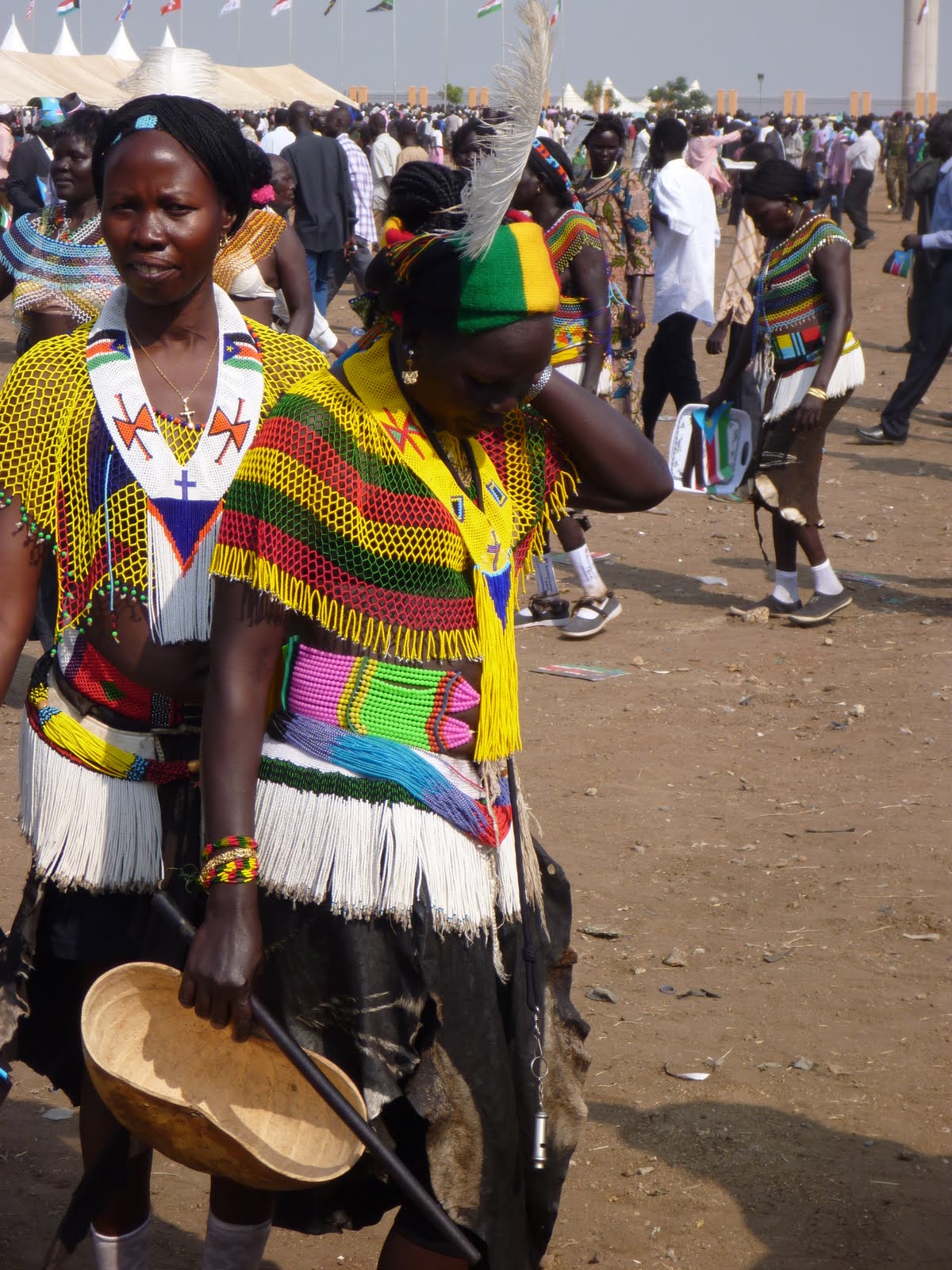
Some fantastic bead work


Tribal dancing

We did do some work!

A patriotic patient


Taking a break from the celebrations - they are pretty heavy

The statue of Dr John Garang is unveiled

Next the flag is raised up the huge electronic flagpole to the huge crowds delight
(and it made it to the top despite the worries that it may not due to power or another mishap)


The crowd celebrating

More musical instruments

Some very interesting tribal atire

More music

Some drum playing for the dancing

Being guarded efficiently!

James finally met a man who has taught him how to play this instrument,
a fine specimen of which we have housed for the last 5 years!

Relaxing outside the medical tent after the hard work

Interesting and heavy tribal dress


Friday, 8 July 2011

The Eve of Independence

Friday 8th July 2011, the eve of South Sudan’s independence from the Republic of Sudan. Juba has been busy busy busy getting the city ready for the big day. A major clean up has been underway for some weeks with the few paved roads being swept clean of sand and the gardens cleaned up. Plastic bottles have been burnt round the clock and scrap metal exported by the truck-load. And you can see the difference! Walking back from leaving drinks at the Red Cross we saw the first street lights up and running, allowing one to see the huge pits in the pavement dug ready for the other street lights. Parades have started and long streams of cars, truck and motorbikes pour down the roads sounding their horns with people cheering.

With Independence comes journalists and they have arrived in their droves. Telephoto lenses are the order of the day and video cameras swarm the streets and occasionally the hospital. It has certainly become a lot easier to wield a camera in the last few days; having been frequently stopped by police when a lens has been seen in the last few months yesterday I could stand at the countdown roundabout, surrounded by armed soldiers and snap away (though not of them!).

A lunch out with Angelo, one of the doctors here was an experience and certainly caused a stir in the restaurant- ‘since when did white people eat Dinka food’ being the order of the day. Angelo swiftly replying ‘when they walk with a Dinka, they eat like a Dinka’ bringing smiles to the faces of all. The Dinka are the largest tribe here, originally cattle herders many are now involved in business and politics. They are staggering tall (one of the tallest races on earth we have been told, and I will agree having being dwarfed by them). They often have tribal scarring in the form of three diagonal lines on each side of the forehead, though such scarification has been outlawed recently. Many of the tribes have different scars, performed when they are young to differentiate their tribal origins, though the precise reason seems lost in the mists of time.

Anyway, we will be at the hospital tomorrow to see any of the sick who arrive. Hopefully the big day will go off without a hitch and our day will be quiet! With so many politicians and dignitaries coming from across the globe it will be an exciting day for all.

Happy Independence!


Heidi chatting to Dr Mergani (O&G consultant) whilst we wait for a lift home


South Sudan basketball team training for their first game on 11th July

A group of women working hard to keep juba clean and clean

A poster for the clean and green campaign

James teaching the students during a power cut - so back to the white board

Increasing students numbers coming to our teaching

A poster on a truck

The corridor near our office - being painted and new beds and mattresses in preparation for independence

Enjoying a traditional Dinka lunch of Akop (animal intestine and sorghum) wutg Dr Angelo

A VERY busy central countdown roundabout yesterday

Taking advantage of being able to take pictures with all the journalists in town


Some independence posters


The sign outside the hospital

A start to the carnival atmosphere sure to arrive in force tomorrow

Stretchers and first aid kit ready for the celebrations

Tuesday, 28 June 2011

Lockdown


Two weeks before the newest country on the planet is born and we have lockdown. Juba was closed for business as the Southern Peoples Liberation Army (SPLA) conducted searches for guns throughout the city. And let’s be fair here, they are understandably keen to get rid of as many random firearms as possible before the world’s dignitaries arrive for the inevitable motorcade across town to the celebrations in the fields around the grave of Dr John Garang, South Sudan’s liberation leader who died in a plane crash after the same number of days in power as he spent years leading The Struggle in the bush.

Not having our ear quite close enough to the ground we were unaware of the lockdown, and as we hitched a ride in to work at 0700 on Saturday morning with a farmer from the camp we did find it odd that we were almost immediately pulled over by some gentlemen wielding fully automatic rifles. A quick ‘we’re doctors and heading to the Teaching Hospital’ allowed us through to the next blockade 500 metres further on. This happened 4 more times before we reached the hospital gates. We had passed many cars with their boots opened and bonnets up in the search for hardware, and pedestrians spread-eagled against the walls having a compulsory pat-down in case they too were ‘packing heat’. The hospital was like a ghost town: no doctors and no patients. It makes you wonder what happened to the 500 sick people that usually appear every morning. We asked the gate-warden who explained about the gun searches and expressed his surprise that we made it in at all. The roads had certainly appeared empty...

However this was not a day not to make it in. After a number of meetings we had managed to arrange a joint clinical meeting between the UN military hospital from Bangladesh and Juba Teaching hospital. We had started attending their Saturday meetings in the UN Mission (UNMISS) base both for the interesting talks and the amazing hospitality shown by the staff there, and after another filling, tasty, if very (spicy) hot, chicken toasty with tea it seemed that this had to happen; an exchange of knowledge and cultures. The Bangladesh doctors rarely get out of the compound to meet the local Sudanese, and the doc’s at JTH (Juba Teaching Hospital) need some structure for a clinical meeting. So the event was born and I was to present on ‘chest pain’ at the UN base which would be followed by food prepared by the Bangladesh team. And JTH was empty. Brilliant. We hopped an ambulance to the base, after failing to rouse any interest from the junior doctors living across the road from the hospital, and with lights flashing were ushered swiftly through the blocks. The UN guys were very disappointed by the turnout from the hospital, but understood the difficulties due to the road blocks and the day was saved when two of my juniors from medicine strolled in, having endured I don’t know how many full body searches just to get down there. Everyone was pleased and the meeting went very well. Next month it’ll be hosted at JTH and we’ll serve the local specialty of fuul. The ride back was an experience as well, as the dusty roads were almost totally empty and gangs of armed military lined the street corners, sheltering from the blistering midday sun and we cruised through unscathed in our own UN military 4x4.

We were back down at the UNMISS base again today helping with the teaching of the SPLA doctors after being invited to join the Bangladesh team to teach them there. It was great to see the army doctors playing about with manikins (which they had never seen before) with a below knee blast injury and severed hand, out of which poured fake red blood that eventually covered everything.

What else?

Well, Freddie the kitten is still alive- we have had a number of concerned emails regarding the little biting horror. He is as bitey and bouncy as ever and I miss him, and even though she won’t ever admit it, Heidi does too! And now I get sent for ‘time-out’ in the sin-bin instead.

Muddles has been keeping a low profile after word got out that a hit squad from the Department for the Environment were out to get him. I’m sure he’ll be back when the heat is off.

And fuel has arrived in Juba- by boat. With all the aerial bombing in the borders trucks have been unable to pass down safely, hence the shortage, but the barges cruised in last week with tankers on them to supply the town.

And finally...

Our teaching sessions have changed somewhat, as we have been reduced to a zero doctor turnout to any sessions! We have been overwhelmed with their disinterest! However, the medical students have been arriving in droves and each week more and more appear so the little office is overflowing with them, so much so that we are doubling the number of teaching sessions for them. It is great to see such interest and enthusiasm when it doesn’t even count towards their degree, as the University is officially shut, has been for 8 months, and shows no sign of reopening any time soon. These guys are like sponges and have a real keenness to learn. When you quiz them on something tough the following week they remember the answer! Work is afoot to get something more secure and consistent underway for them so we’ll keep you informed. These young men and women are the future of this new country and with that in mind you have to believe that they will drive it to a bright place.

Well, that’s a little update. The next will not be such a long time coming, I promise!


Fuel being transported on the Nile

Proper pizza being made by an Italian at the International Red Cross!

A rare view in Juba

The Bangladesh UN doctors coming to JTH to donate some drugs

James presenting at the joint UN JTH Clinical Meeting

Sharing some traditional Bangladesh food afterwards

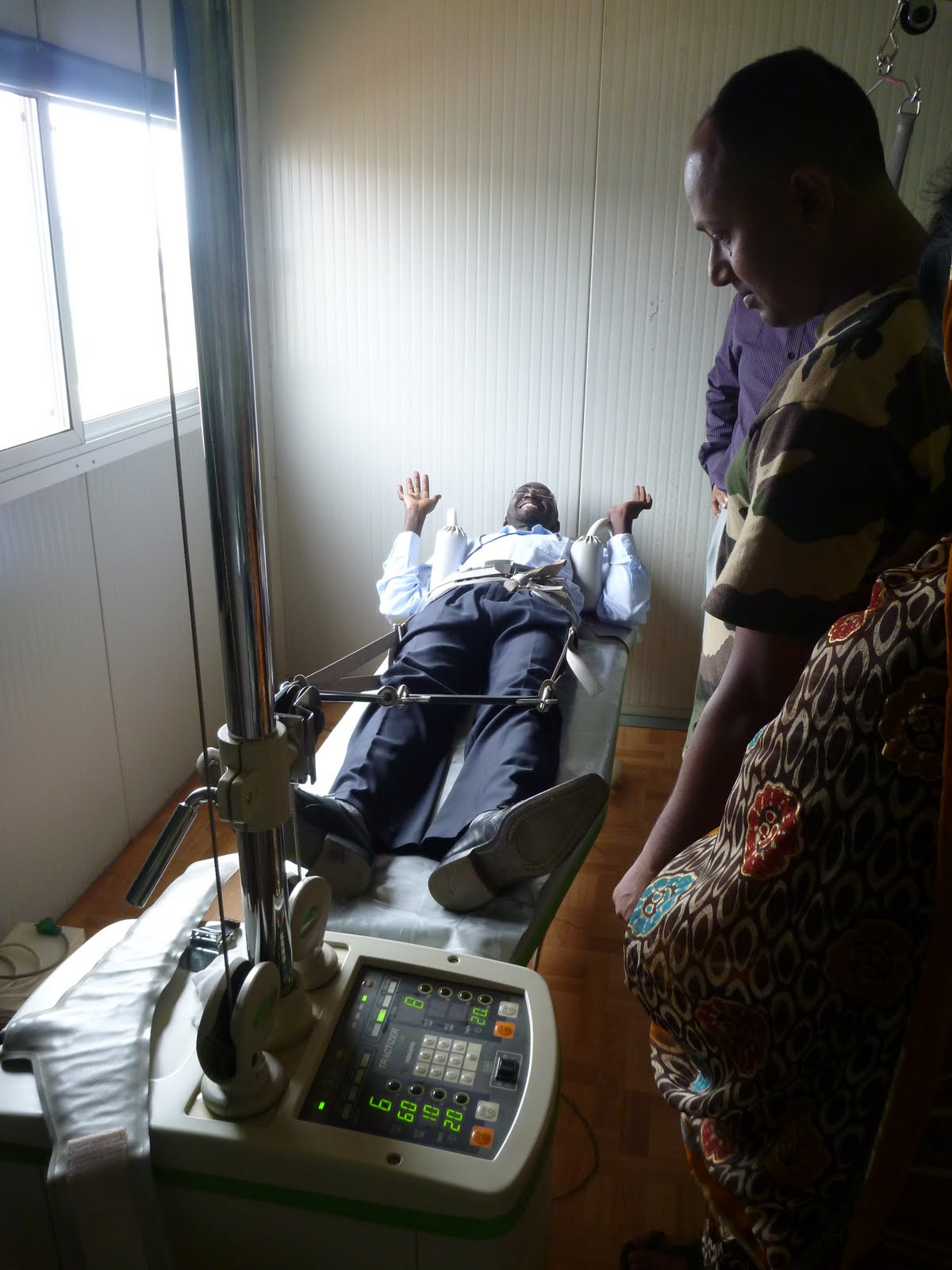
James experimenting with traction!

Stephen being a good sport and trying out the pelvic traction

James relaxing with an Ethiopian coffee

Freddie back to full fitness playing in one of our bags

Some baking before we leave the house - yummy


A view of the football pitch walking to work - the middle of it is the road!

Increasing success of teaching for the medical students

Some practical small group sessions

The First South Sudan Specialists Conference